Seattle Neighborhood Guide
Magnolia
Magnolia is the closest thing Seattle has to its own private peninsula — because that’s exactly what it is.
Living Here
What It’s Like to Live in Magnolia
Magnolia feels like a secret that only locals keep. Three roads in, three roads out — and once you cross the Magnolia Bridge, the pace drops immediately. This is a neighborhood that doesn’t compete for attention. It earns loyalty from people who discover it and never want to leave. The village center along W McGraw Street is small and intentional: a family-run Mexican restaurant since 1996, a Sicilian trattoria that transports you, a neighborhood pub where the windows roll up on warm evenings, and the kind of sidewalks where people still stop to talk.
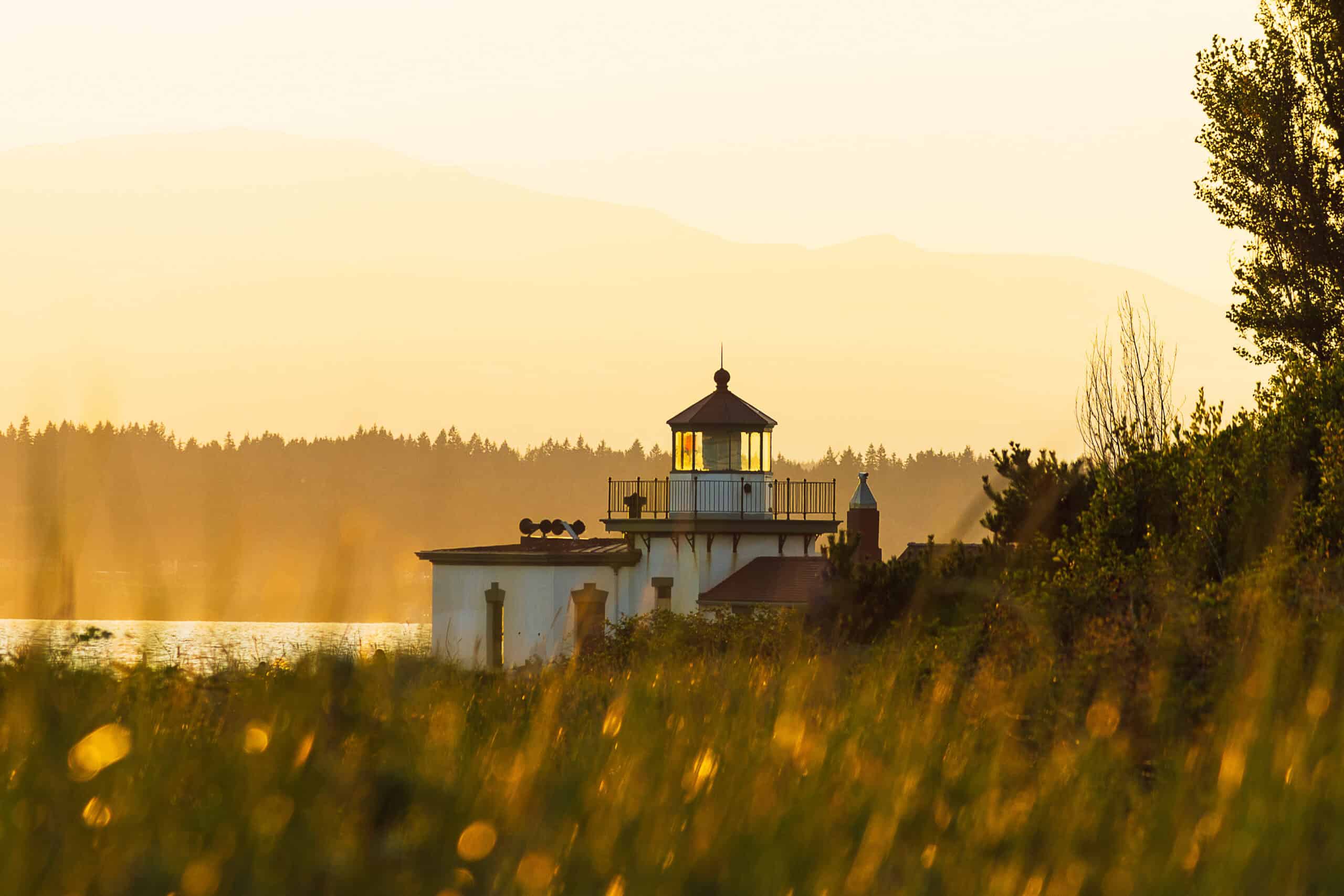
What defines Magnolia more than anything is its relationship with the land. The bluffs along Magnolia Boulevard offer unobstructed views of Puget Sound, the Olympic Mountains, and Mount Rainier — the kind of panorama that stops you mid-walk. Discovery Park, Seattle’s largest at 534 acres, anchors the peninsula’s western edge with old-growth forest, tidal beaches, and a functioning lighthouse from 1881. For residents, the park isn’t a weekend destination. It’s part of the daily routine — a morning loop, an afternoon beach walk, a place to watch the seasons turn.
The housing stock is a mix of mid-century homes, well-maintained Craftsmans, and newer contemporary builds, many positioned to capture the views. Magnolia draws families looking for space, professionals who want quiet without sacrificing proximity, and longtime residents who’ve been here for decades. People wave from their yards here. The local pub knows your order. It’s an uncommon kind of neighborhood for a city this size.
Food & Drink
Where We Eat & Drink
Magnolia’s dining scene is compact but rewarding. Palisade, perched on the marina with sweeping views of Elliott Bay, remains one of the city’s best waterfront dining experiences — the kind of place where you bring visitors to show them Seattle at its finest. In the village, Mondello delivers authentic Sicilian cuisine in an intimate, family-owned setting; the handmade pasta is worth building an evening around, and reservations on a Saturday feel earned.
El Ranchon has been a Magnolia institution since 1996, and the margaritas have earned a following that extends well beyond the neighborhood. The Magnolia Village Pub serves as the community living room — windows up on a summer evening, a reliable burger, and enough regulars to make any newcomer feel welcome. For a midday sandwich, Fishermen’s Green Market and Deli at Fishermen’s Terminal is a locals-only destination; the east coast–inspired sandwiches and working-waterfront setting make it easy to lose an hour you didn’t plan on spending.
On the craft beverage side, Bizarre Brewing in industrial Magnolia has become one of the most talked-about taprooms in Seattle — side-pulled lagers, hand-pulled pub ales, and mixed-culture sours that attract attention citywide. Fast Penny Spirits, a woman-owned distillery crafting Italian-inspired amaro with Pacific Northwest botanicals, adds depth to a neighborhood that punches well above its size when it comes to what’s in the glass.
Nature & Recreation
Parks & Outdoor Life
Discovery Park is not just Magnolia’s centerpiece — it’s arguably the most significant urban park in the Pacific Northwest. The 534-acre former military installation feels genuinely wild: 12 miles of trails weave through forest, meadow, and dramatic sea cliffs. The 2.8-mile Loop Trail is a daily ritual for many residents, while the South Beach Trail descends the bluff to the West Point Lighthouse, built in 1881 and still operational. On clear days, the views from the bluff span the Olympic Mountains, Mount Rainier, and the full breadth of Puget Sound. Birdwatchers track over 270 documented species, and harbor seals and sea lions are visible from the shoreline year-round.
Beyond the park, Magnolia Boulevard itself is one of Seattle’s most scenic routes — by car or on foot. The bluff-top path draws sunset watchers nightly, and Ella Bailey Park offers a quieter perch with a direct line of sight toward the downtown skyline and the Cascades. Magnolia Playfield anchors the village area with athletic fields, tennis courts, and a neighborhood playground.
Getting Around
Transit & Commute
Magnolia is car-oriented by nature — the peninsula’s geography means three access points and limited transit compared to denser Seattle neighborhoods. Metro Route 24 connects Magnolia Village to downtown Seattle in about 30 minutes, while Route 33 serves Discovery Park and east Magnolia with connections to downtown and Interbay. Route 31 links the neighborhood to the University District through Fremont. For most residents, the car remains the primary mode of transit.
From the Magnolia Bridge, downtown is a 10-minute drive via Elliott Avenue. The Eastside is accessible via I-5 South to SR 520 — typically 25 to 30 minutes to Bellevue in normal traffic. Queen Anne sits directly to the east across Interbay, Ballard is north across the Ship Canal, and the Ballard Locks connect to both neighborhoods by car or on foot. The planned Magnolia Trail Project would eventually create a dedicated cycling and pedestrian connection from the neighborhood to Smith Cove Park and the citywide trail network.
Market Insight
The Magnolia Real Estate Market
Magnolia’s market reflects its character: steady, desirable, and never flashy. The median home price hovers around $1.2 million, with single-family homes typically ranging from $900,000 for a well-maintained mid-century to $3 million or more for view properties along the bluffs. Waterfront and view lots along Magnolia Boulevard and Perkins Lane command the highest premiums and rarely come to market.
The housing stock is predominantly single-family, featuring a mix of Craftsman bungalows, mid-century ranches, Tudors, and newer contemporary builds. Condominiums are concentrated along Thorndyke Avenue W, offering a more accessible entry point. Townhome development has increased modestly in recent years, though Magnolia’s zoning and community culture tend to favor preservation over density — which keeps the neighborhood’s character intact.
What makes Magnolia’s market distinctive is its stability. Homeowners tend to stay for years — sometimes decades — which means inventory is consistently limited. When well-priced listings come to market, competition is immediate. The combination of Discovery Park access, Puget Sound views, and a tight-knit community atmosphere creates lasting demand from buyers who prioritize substance over spectacle. If you’re considering a purchase or sale in Magnolia, we’d welcome the conversation.
Local Directory
Places of Interest
Dining
1
Palisade
2
Mondello Ristorante Italiano
3
El Ranchon
4
Magnolia Village Pub
5
Fishermen’s Green Market & Deli
Breweries & Spirits
6
Bizarre Brewing
7
Fast Penny Spirits
Parks & Recreation
8
Discovery Park
9
West Point Lighthouse
10
Magnolia Boulevard Viewpoint
11
Ella Bailey Park
12
Magnolia Playfield
Village Life
13
Magnolia Village
Transit
14
Route 24 Bus — Magnolia Village
15
Route 33 Bus — Discovery Park
FAQ
Magnolia Neighborhood FAQ
Is Magnolia a good neighborhood to buy a home in Seattle?
Magnolia is one of Seattle’s most desirable residential neighborhoods, offering a rare combination of natural beauty, privacy, and proximity to downtown. The median home price is approximately $1.2 million, with waterfront and view properties reaching $3 million or more. The housing stock includes Craftsman bungalows, mid-century homes, Tudors, and newer contemporary builds. Discovery Park — Seattle’s largest at 534 acres — anchors the neighborhood, and the bluff-top views along Magnolia Boulevard are among the most dramatic in the city. Limited access points and strong homeowner retention keep inventory tight and values stable.
How do you get to Magnolia from downtown Seattle or the Eastside?
Magnolia is accessible from downtown Seattle via the Magnolia Bridge on W Garfield Street, which connects through Interbay in about 10 minutes by car. The Dravus Street entrance connects from the north, and Emerson Way from the east near Fishermen’s Terminal. Metro bus Route 24 runs between Magnolia Village and downtown Seattle in approximately 30 minutes, while Route 33 serves Discovery Park and east Magnolia. From the Eastside, take SR 520 west to I-5 South, exit at Mercer Street, and follow Elliott Avenue north to the Magnolia Bridge — typically 25 to 30 minutes from Bellevue. Queen Anne is directly to the east, Ballard is north across the Ship Canal, and Interbay connects the neighborhood to the rest of northwest Seattle.
What makes Magnolia different from other Seattle neighborhoods?
Magnolia is a true peninsula, connected to the rest of Seattle by just three roads. This geography creates a sense of seclusion that is unlike anything else in the city — it feels closer to an island community than an urban neighborhood. While Queen Anne shares a similar residential character, Magnolia is quieter, more spacious, and anchored by Discovery Park, a 534-acre wild coastal park that no other Seattle neighborhood can rival. Unlike Ballard, which has embraced rapid development and density, Magnolia has maintained a lower profile and a slower pace. The village center along W McGraw Street offers walkable convenience without the crowds, and the views from Magnolia Boulevard — spanning the Olympics, Puget Sound, and Mount Rainier — are regularly compared to those from Kerry Park but without the tourist traffic.
Connect
Thinking About Magnolia?
Whether you’re exploring Magnolia for the first time or considering a move to the peninsula, Anton and Madeline are here to help. We know the streets, the views, the market — and we’d love to share what we’ve learned.
Elev8 Realty Group with Compass believes this information to be accurate but cannot guarantee it. Data sourced from public records, NWMLS, and local knowledge. Provided for informational purposes only.
All Neighborhoods · Queen Anne · Ballard · Wallingford · Contact Our Team · Buyer Services · Seller Services